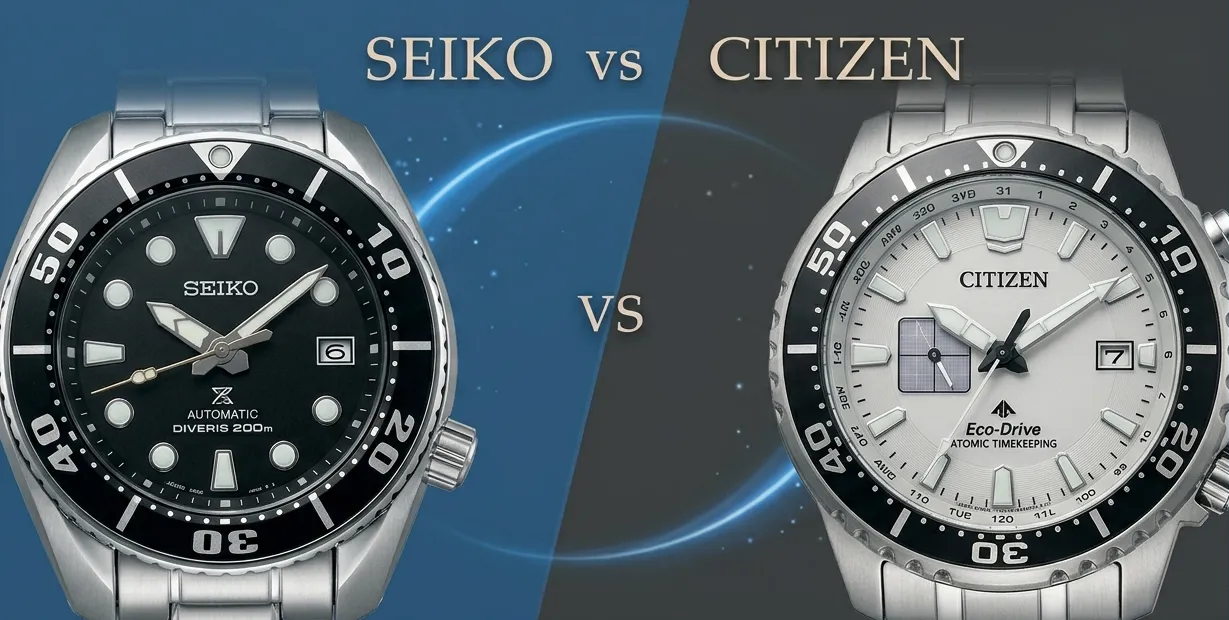
I know, you are stuck choosing between two Japanese watch giants, you are not alone. The Seiko vs Citizen debate is the most common question for watch buyers in 2026. Both brands make incredible tools, but they have hidden differences that change how the watch feels, lasts, and holds its value. Most buyers only look at the price or the style, missing the critical engineering choices beneath the surface. This guide reveals the real truth about accuracy, materials, and long-term costs so you can pick the perfect watch for your life.
The Accuracy Myth: It Is Not Just About Seconds
When people talk about accuracy, they usually think quartz is king and mechanical is a hobby, but the Seiko vs Citizen battle blurs these lines in fascinating ways. You might assume a solar watch from Citizen is just as accurate as a high-end quartz from Seiko, but the numbers tell a different story.
The Quiet King of Precision
Citizen has a secret weapon that very few buyers know about. While most of their watches are accurate to about ±15 seconds a month, they have a specific movement called the Caliber 0100. This is not your average watch part; it is accurate to within ±1 second per year. Even more impressive is their new Eco-Drive 50th Anniversary model, the AQ4091-56W, released in 2026. This watch has an accuracy of ±5 seconds per year and features a perpetual calendar that works until the year 2100 without needing adjustment.
On the other side, Seiko has its own tricks. Their standard quartz watches are good, usually around ±10 seconds per year. But Seiko does something no one else can do with mechanical energy. They have a technology called Spring Drive. This combines the heart of a mechanical watch with the brain of a quartz watch. The result is an accuracy of ±1 second per day. While Citizen wins on pure yearly quartz accuracy, Seiko wins on making a mechanical watch feel as smooth as a glacier with that same daily precision.
Mechanical Realities
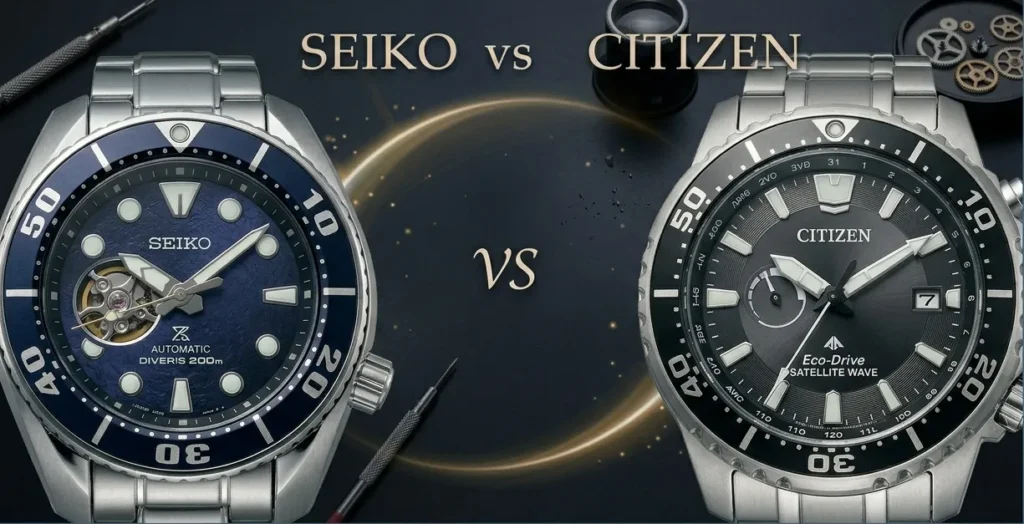
If you prefer the ticking of a traditional automatic watch, the Seiko vs Citizen comparison shifts again. Seiko is famous for its mechanical variety. They have movements like the 4R36 and the 6R35. The 6R35, found in many mid-range models, is rated to ±15 seconds a day. However, real-world tests often show Seiko automatics performing even better, sometimes within -1 to +8 seconds a day.
Citizen does make mechanical watches, but they are less common. Their new Series 8 line uses the Caliber 9051. This is a fantastic movement with a 42-hour power reserve. But generally, Citizen focuses its energy on quartz and solar technology. If you want a mechanical watch, Seiko offers a much wider range of options, from the affordable NH35 to the premium 9S calibers found in Grand Seiko.
| Feature | Seiko Mechanical (6R35) | Citizen Mechanical (9051) |
|---|---|---|
| Accuracy | ±15 sec/day (rated) | ±15 sec/day (rated) |
| Power Reserve | 70 hours | 42 hours |
| Jewels | 24 | 26 |
| Availability | Very High | Moderate |
The Weight You Cannot See: Material Science
One of the biggest hidden differences in the Seiko vs Citizen debate is what the watch is made of. You might pick up a Citizen and think, “This feels light.” Then you pick up a Seiko and think, “This feels solid.” There is a scientific reason for that.
Super Titanium vs. Stainless Steel
Citizen has invested heavily in a material called Super Titanium. This is not just regular titanium. It is a proprietary material that goes through a special hardening process called Duratect. The result is a case that is 40% lighter than stainless steel but five times harder. This means it is incredibly resistant to scratches. You can wear a Citizen Super Titanium watch every day for years, and it will still look new. In 2026, Citizen is even using “recrystallised titanium” in limited editions like the ATTESSA F950, which creates unique crystal patterns on the case.
Seiko, on the other hand, often uses stainless steel or their own Hardlex crystal. Hardlex is a type of mineral glass that is tougher than regular glass but not as scratch-resistant as sapphire. While Seiko does use titanium in some high-end models, Citizen dominates this space in the mid-price range. If you hate scratches and love a light watch on your wrist, Citizen has a clear advantage here. Many Citizen Promaster models now come with sapphire crystals and Super Titanium cases as standard, offering better materials at the same price point as their competitors.
The Crystal Difference
When we talk about the glass covering the dial, the difference is stark. Citizen has moved to sapphire crystal in many of their newer lines, including the Promaster and the Series 8. Sapphire is the gold standard; it is extremely hard to scratch. Seiko still uses Hardlex crystal in many of their popular models, like the Seiko 5 Sports line. Hardlex is durable and shatter-resistant, but it will pick up fine scratches over time that sapphire would not. This is a small detail that most buyers miss until they see a hairline scratch on their Seiko after a year of wear.
Power and Longevity: The Hidden Costs
When you buy a watch, you are not just buying the object. You are buying the next ten or twenty years of ownership. This is where the Seiko vs Citizen argument gets serious. How long will the watch run? How much will it cost to keep it running?
Solar Power: Eco-Drive vs. Seiko Solar
Both brands have solar watches. Seiko calls theirs “Solar,” and Citizen calls theirs “Eco-Drive.” They both work by turning light into energy. But the way they store that energy is different.
Citizen Eco-Drive uses a rechargeable cell (capacitor) that is designed to last a very long time. On a full charge, most Citizen watches can run for 6 months in total darkness. Some high-end models, like the new Endeavor Chrono, can last up to 270 days (about 9 months) in darkness. Even more impressive, the new Promaster Wave Tracker has a power reserve of up to 3 years in power-save mode. Citizen claims their capacitors can last 20 to 40 years before needing replacement. This means you might never need to open the back of the watch for a battery change in your lifetime.
Seiko Solar watches are also excellent. They use a lithium secondary battery that typically lasts 7 to 10 years. In terms of power reserve, Seiko Solar watches usually last 6 to 12 months in the dark. While this is great, Citizen generally edges them out with longer darkness reserves and a longer predicted lifespan for the storage cell. If you want a “set it and forget it” watch, Citizen Eco-Drive is arguably the most reliable platform in the industry.
The Mechanical Maintenance Trap
If you choose a mechanical Seiko, you need to know a hidden truth: it requires love and money. Mechanical movements have hundreds of tiny moving parts. They need oil, and that oil dries up. Seiko recommends servicing their mechanical watches regularly. This can cost money and time.
Citizen mechanical watches, like the new NJ022 diver, also need service. Their Cal. 8210-B21 movement has an accuracy of -20/+40 seconds a day, which is decent for the price. However, because Citizen focuses less on mechanical mass production, parts availability for older Citizen mechanical models can sometimes be trickier than for Seiko, which makes almost every part in-house. Seiko is extraordinary in its vertical integration; they make their own hairsprings, cases, dials, and even lubricants. This makes servicing a Seiko mechanical watch generally easier and more straightforward globally.
Quality Control and Finish: The Devil in the Details
Here is a secret that salespeople might not tell you: Citizen often has better quality control (QC) on their standard production watches than Seiko. When you buy a mid-range Citizen, the alignment of the bezel, the centering of the dial, and the finish of the case are often flawless.
Seiko, especially in their lower-priced lines like the Seiko 5 or entry-level Prospex, is known for having “character.” This is a polite way of saying you might find a misaligned bezel or a dust speck under the crystal. It does not happen every time, but it happens often enough that it is a known trait of the brand. Seiko makes so many watches that their QC net sometimes lets small things slip through.
The Lume Difference
However, Seiko fights back in the dark. Seiko uses a material called Lumibrite. This is widely considered to be superior to the lume used by Citizen. If you go into a dark room, a Seiko Prospex diver will glow brighter and last longer through the night than a comparable Citizen Promaster. For divers or anyone who needs to read the time in low light, this is a massive hidden advantage for Seiko.
- Apple Watch Series 12: Release Date, Price, Features, Specifications & Latest Rumors
- Oura Ring 5 vs HUAWEI WATCH D3: Which Wearable Is Right for You?
- HUAWEI WATCH D3 Review: Features, Specifications, Health Tracking & Price
- Timex Ironman Flix TW5M63000 Review: Price, Features, Specs & Is It Worth Buying?
- Rado White Ceramic Square Watch: Price, Features, Specifications & Best Models
High-End Finishing
When we move up to the luxury tier, the game changes. Grand Seiko, the luxury arm of Seiko, is famous for finishing that rivals the best Swiss brands. Their dials are works of art. In 2026, they released the “Ice Forest at Dawn” and the “Sakura-Wakaba,” which feature incredible textures and hand-engraving. The “Red Lion” jewellery watch is priced at a staggering £250,000, showing just how high they can go.
Citizen has its own luxury line called “The Citizen” and the Campanola series. The Campanola models feature hand-assembled movements and unique dials, like the “Cosmos Sign” which shows star constellations. The 2026 Eco-Drive 50th Anniversary model features a hand-dyed green Tosa washi paper dial. While Grand Seiko might have the edge in global recognition for finishing, Citizen’s high-end pieces offer incredible value and unique artistic flair that is often overlooked.
Value and Collectibility: What Happens Later?
One of the most important hidden differences in the Seiko vs Citizen debate is what happens when you decide to sell. Do these watches hold their value?
The Resale Reality
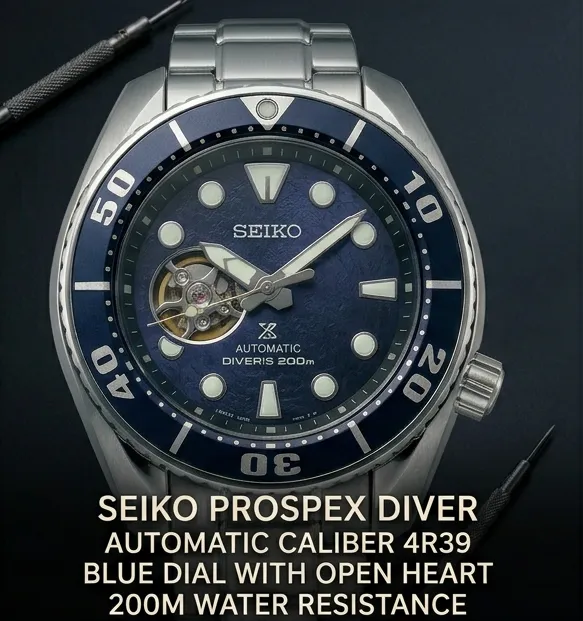
Generally speaking, Seiko watches tend to hold their value better than Citizen watches in the long run. This is partly because Seiko has a stronger brand legacy among collectors. Models like the Seiko SKX (now discontinued) and the Prospex divers maintain strong resale value. Mechanical and automatic movements from Seiko are more sought after by collectors, which keeps prices stable.
Citizen watches, particularly their quartz and Eco-Drive models, tend to depreciate faster. Because they are so reliable and durable, there is less urgency to buy them on the secondary market, and the technology does not have the same “romance” for collectors as a mechanical movement. However, there are exceptions. Limited edition Citizen models, like the Campanola or the high-end “The Citizen” lines, can hold value well due to their rarity.
The Grand Seiko Exception
If you step into the world of Grand Seiko, the rules change completely. Grand Seiko competes directly with Swiss luxury brands. Recently, Spring Drive models like the famous “Snowflake” (SBGA211) have seen their market prices rise. In fact, Spring Drive models have appreciated by 22-28% since 2024. A watch that retailed for $6,900 might now have a market price around $4,568 (used) or higher depending on demand. While they still sell below retail initially, the trend is upward for the most popular models.
In contrast, even high-end Citizen quartz models above $3,000 can face 15-20% resale depreciation. If you are buying a watch as an investment or hope to sell it later, Seiko (and especially Grand Seiko) is the safer bet. If you are buying a watch to wear for 20 years and never sell, Citizen offers better value for money upfront.
| Brand/Line | Typical Depreciation | Collector Demand | Best For |
|---|---|---|---|
| Seiko Prospex | Low (10-20%) | High | Resale Value |
| Seiko 5 Sports | Moderate (20-30%) | Moderate | Entry Level |
| Grand Seiko | Negative (Appreciates) | Very High | Investment |
| Citizen Promaster | Moderate (20-30%) | Low/Moderate | Daily Beater |
| Citizen Eco-Drive | High (30-40%) | Low | Long-term Wear |
| Citizen Campanola | Low (Limited Ed.) | Niche | Art/Uniqueness |
2026 Model Spotlight: What to Buy Right Now
To help you decide, let’s look at some specific models available in June 2026 that highlight these differences.
For the Tech Lover: Citizen Eco-Drive 50th Anniversary
If you want the best technology money can buy, look at the Citizen AQ4091-56W. Priced at $3,095, it is limited to only 650 pieces worldwide. It has the ±5 seconds/year accuracy, a perpetual calendar until 2100, and a Super Titanium case. It runs for 18 months on a full charge in power save mode. This is the peak of solar watchmaking.
For the Diver: Seiko Prospex vs. Citizen Promaster
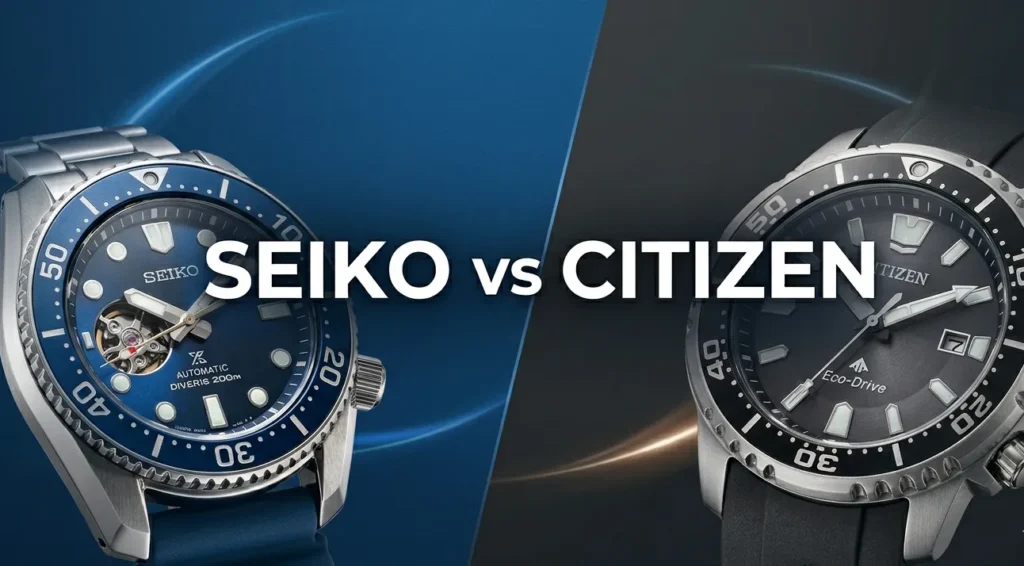
If you want a dive watch, both brands excel. The Seiko Prospex series offers ISO 6425 certification with mechanical movements, giving you that classic sweeping second hand. Entry-level Prospex models start from around Rs. 14,954.
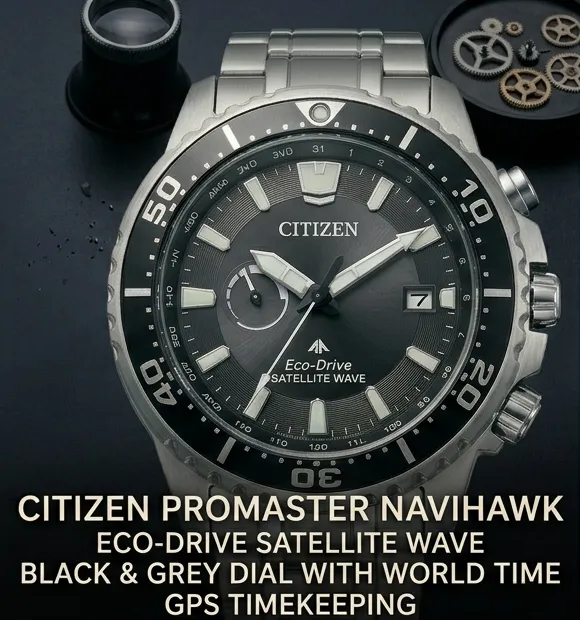
Citizen’s Promaster Marine also has ISO 6425 certification but uses Eco-Drive. The new Promaster Wave Tracker (JV3000-13E) is a standout for sailors, featuring a tide graph and moon phase with a 3-year power reserve. It is travel-ready and tough, with 200m water resistance.
For the Luxury Seeker: Grand Seiko Ushio
For those with a bigger budget, the new Grand Seiko “Ushio” Diver is a masterpiece. Priced at £10,500, it features a Spring Drive movement with an accuracy of ±20 seconds per year (U.F.A. standard). The dial captures the movement of the ocean with a textured surface that changes with the light. It is a watch that proves mechanical technology can still surprise us in 2026.
For the Everyday wearer: Citizen Series 8
If you want a dressy automatic watch that doesn’t break the bank, the Citizen Series 8 is a hidden gem. Models like the NB6080-51W have a 39.3mm case, sapphire glass, and the Cal. 9051 movement. Priced between $1,300 and $1,600, it offers finishing and specs that usually cost much more. It is thinner and often better finished than Seiko equivalents in this price range.
My Personal View : Which Brand Fits Your Life?
So, who wins the Seiko vs Citizen battle? The truth is, there is no single winner. It depends entirely on what you value.
Choose Citizen if:
- You want a watch that is virtually maintenance-free. The Eco-Drive technology is unbeatable for convenience.
- You hate scratches. The Super Titanium cases are incredibly tough.
- You want the best accuracy possible without spending a fortune. The Caliber 0100 and high-end Eco-Drive models are precision champions.
- You prefer better quality control out of the box.
Choose Seiko if:
- You love mechanical watches. Their range of automatic movements is unmatched.
- You care about resale value. Seiko watches generally hold their value better over time.
- You need excellent visibility in the dark. Lumibrite is the best in the business.
- You appreciate the heritage and “soul” of a mechanical movement, even if it needs occasional servicing.
In the end, both brands offer incredible value. They are proof that you do not need to spend thousands of dollars to get a world-class timepiece. Whether you choose the solar power of Citizen or the mechanical heart of Seiko, you are getting a piece of Japanese engineering that will serve you well for decades. The hidden differences are there, but now that you know them, you can make the choice that fits your life perfectly.
Limitations & Unknowns
While this report covers the major differences, specific 2026 model specifications for every single line (such as the full Citizen Promaster technical matrix) are still being released throughout the year. Resale value statistics for brand new 2026 models are projections based on historical trends and early market data, as full-year data will not be available until 2027. Always verify the exact specs of a specific model number on the official manufacturer website before purchasing, as features can vary by region.
2 thoughts on “Seiko vs Citizen: Hidden Differences Most Buyers Never Notice”