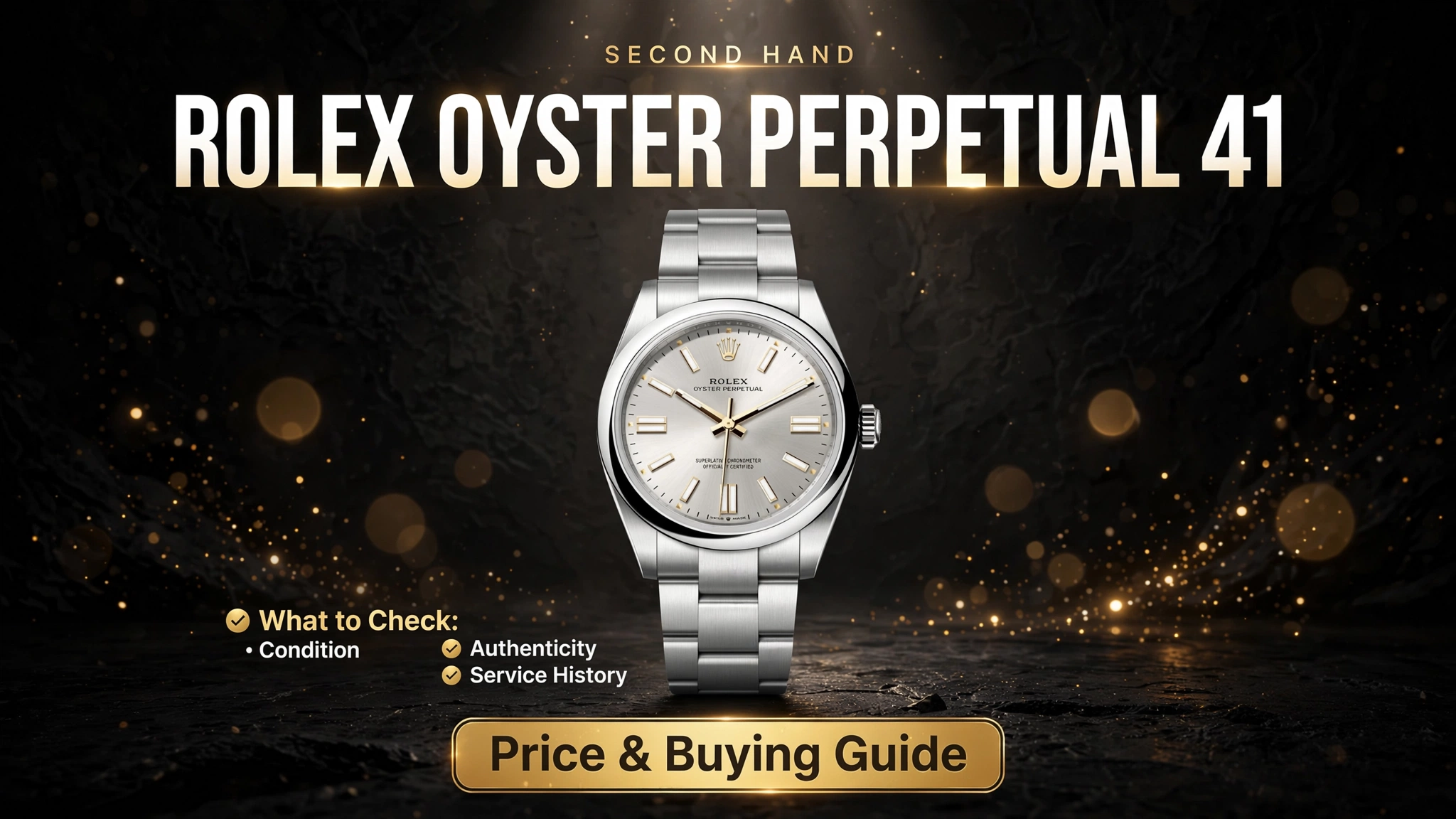
Buying a luxury watch is a major investment, and the Second Hand Rolex Oyster Perpetual 41 stands out as a top choice for collectors and first-time buyers alike. This guide reveals that while standard models trade between $7,500 and $9,500, rare dial colors like Turquoise can command $15,000 to $22,000 on the secondary market. Success in buying pre-owned depends on verifying three critical factors: original case geometry (avoiding over-polishing), a smooth sweeping second hand, and a documented service history which can add 10–20% to the watch’s value. By understanding regional price differences and authentication steps, you can secure a genuine timepiece that holds its worth.
Understanding Market Prices and Value
The cost of a Second Hand Rolex Oyster Perpetual 41 varies significantly based on dial color, condition, and geographic location, making market knowledge essential for a fair purchase.
Retail vs. Secondary Market Pricing
When new, the Rolex Oyster Perpetual 41 in stainless steel (Oystersteel) had a retail price of approximately $6,400 to $6,500. However, due to high demand and limited availability at authorized dealers, the pre-owned market often sees higher prices. For standard dial colors like black, white, or silver, you can expect to pay between $7,500 and $9,500 for a used model in good condition. Some listings for pre-owned standard models range broadly from $6,000 to $10,000, depending on the specific year and wear.
The Premium on Vibrant Dials
Not all Oyster Perpetual 41 models are priced equally. The “celebration” dials released in vibrant colors carry a massive premium due to their popularity and discontinuation.
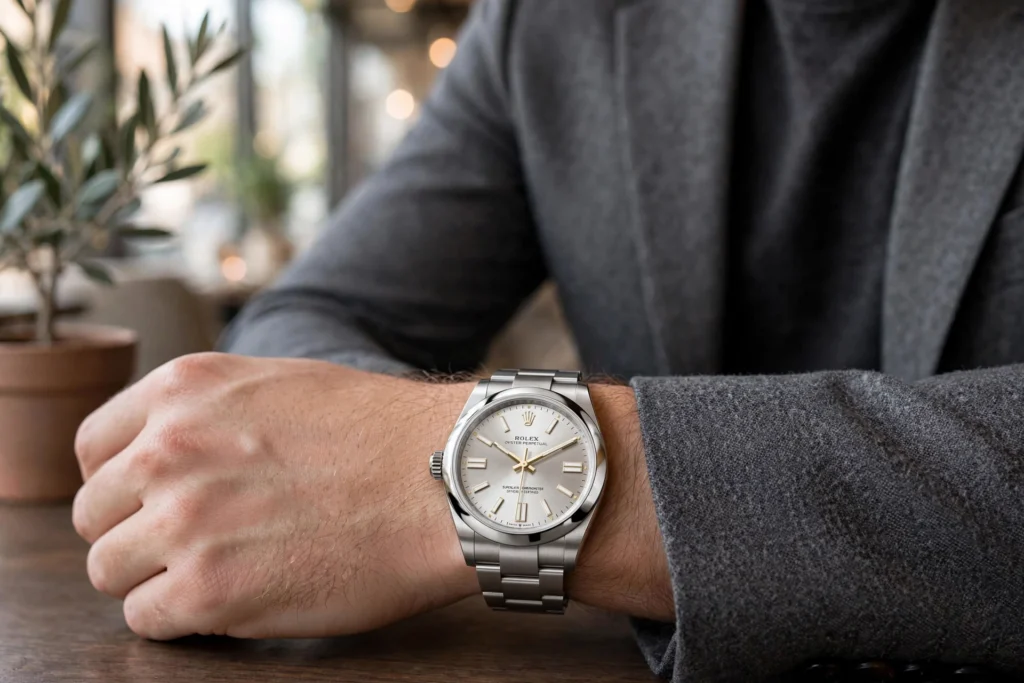
- Green and Yellow Dials: These sought-after colors typically trade between $10,000 and $16,000 on the secondary market.
- Turquoise (Tiffany Blue) Dial: This is the most valuable variant. Prices generally range from $15,000 to $22,000. At its market peak in 2022, this specific model sold for as high as $27,000. Even with market fluctuations, discontinued dials retain a heavy premium.
- Celebration Dial: Featuring balloon motifs, this rare dial commands prices between $18,000 and $25,000.
In general, vibrant dials can trade at 200% to 300% above their original retail price. The 41mm case size specifically commands the highest prices compared to the smaller 28mm, 31mm, 34mm, and 36mm versions.
Regional Price Differences
Prices for the Second Hand Rolex Oyster Perpetual 41 differ by region due to taxes, import duties, and local demand.
- India: Pre-owned prices range from ₹12 lakh to ₹18 lakh (approximately $14,400 to $21,600 USD), which is often higher than US markets due to import taxes.
- United Kingdom: Certified pre-owned models typically sell between £5,001 and £10,000 (approx. $6,300 to $12,600 USD).
- Germany: Listings for pre-owned models start around €7,590 (approx. $8,200 USD), with turquoise dials reaching €10,507 (approx. $11,400 USD).
- United States: The market is highly liquid, with standard models averaging $8,000 and vibrant dials reaching significantly higher peaks.
| Region | Standard Dial Range (Approx. USD) | Turquoise Dial Range (Approx. USD) | Notes |
|---|---|---|---|
| USA | $7,500 – $9,500 | $15,000 – $22,000 | Highly liquid market |
| India | $14,400 – $21,600 | N/A (Rare) | Higher due to import duties |
| UK | $6,300 – $12,600 | N/A | Certified pre-owned available |
| Germany | $8,200+ | $11,400+ | Euro-based pricing |
Key Features and Specifications
Before purchasing a Second Hand Rolex Oyster Perpetual 41, understanding its official specifications helps you verify that the watch you are inspecting matches factory standards.
Case and Construction
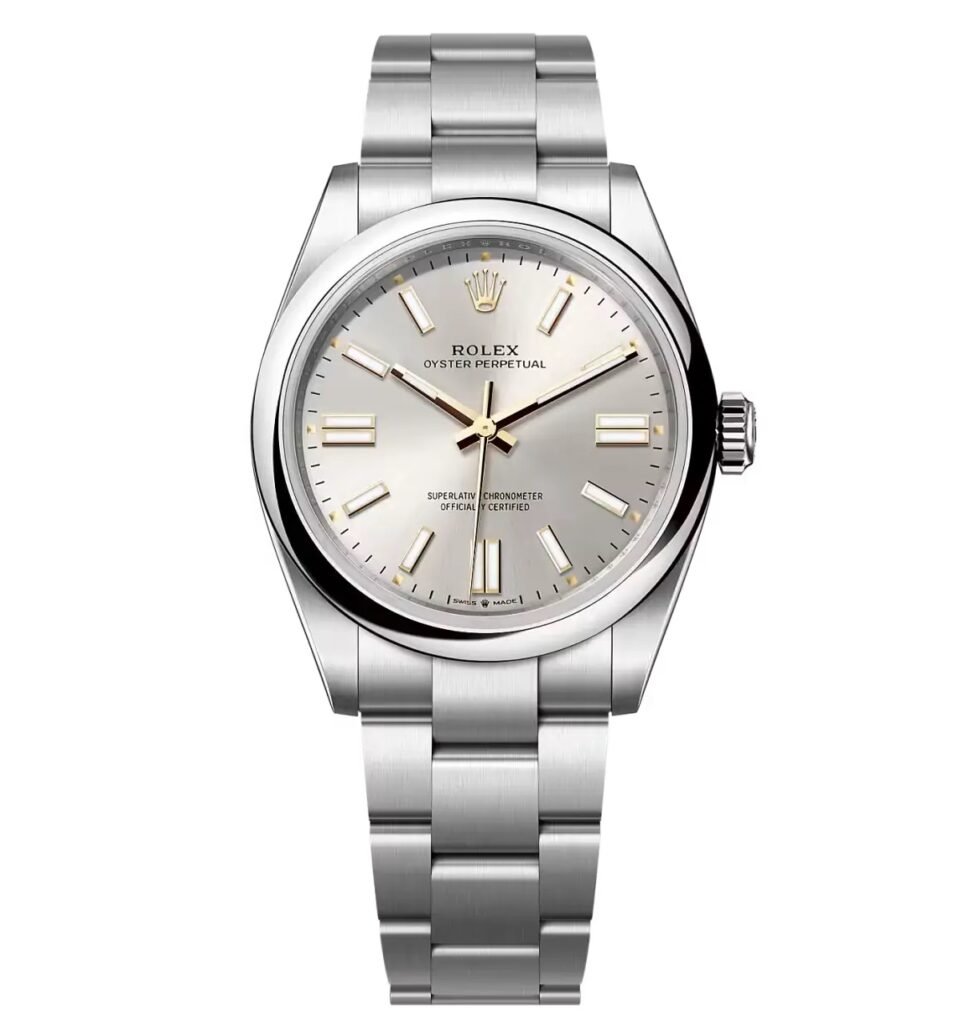
The Oyster Perpetual 41 features a 41mm case diameter, which many consider the ideal “sweet spot” for wrist presence. The case is available in Oystersteel (stainless steel), Rolesor (steel and gold), or full gold. A key feature of the Oyster case is its waterproofness; the watch is rated to 100 meters (330 feet), making it suitable for swimming and snorkeling. The case back is solid and screwed down tightly, a hallmark of Rolex durability.
Movement and Performance
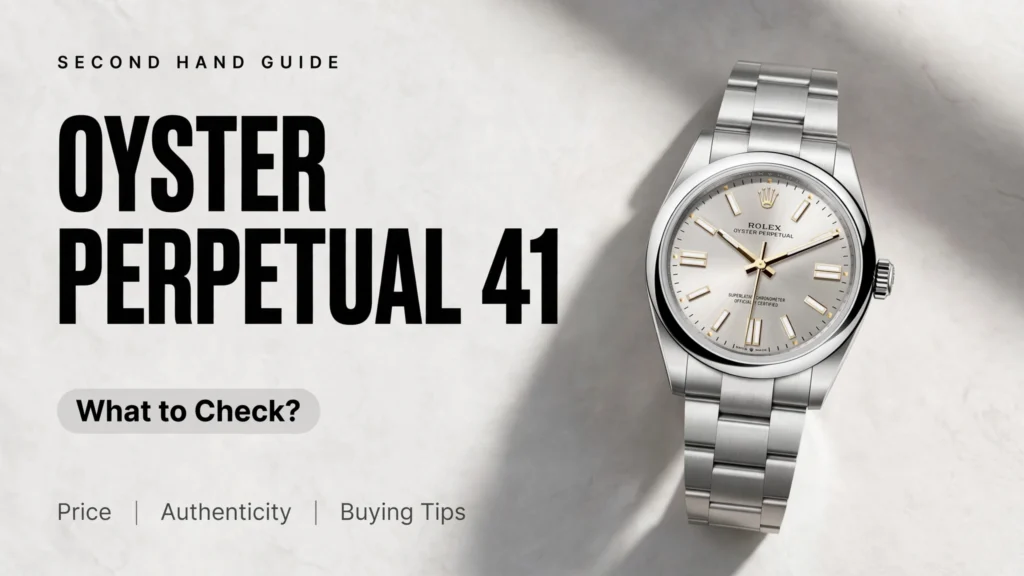
Inside the 41mm model beats the Calibre 3200 series movement, a self-winding mechanical movement developed entirely by Rolex. This movement is a “Superlative Chronometer,” meaning it has passed rigorous tests for precision, power reserve, and waterproofness.
- Power Reserve: Approximately 70 hours. If you take the watch off on Friday evening, it will still be running on Monday morning.
- Accuracy: Certified to within -2/+2 seconds per day after casing.
- Second Hand Motion: A genuine Rolex movement drives the second hand in a perfectly smooth, sweeping motion, distinct from the ticking motion of quartz watches.
Dial and Crystal
The dial is protected by a scratch-resistant sapphire crystal. Unlike the Rolex Datejust or Submariner, the standard Oyster Perpetual 41 does not have a date window and therefore does not have a Cyclops lens. If you see a Cyclops lens (magnifying bubble) on an Oyster Perpetual 41, it is likely a fake or a modified watch. The dials are famous for their intense, lacquered colors, which are applied using a PVD (Physical Vapor Deposition) process for long-lasting vibrancy.
Authentication Checklist: How to Spot a Fake
Authenticating a Second Hand Rolex Oyster Perpetual 41 requires a keen eye for detail, as counterfeiters are becoming increasingly sophisticated. Follow these steps to ensure legitimacy.
1. Verify the Weight
Rolex watches are built from solid, high-density materials. A genuine Oyster Perpetual 41 in steel should weigh at least 100 grams (typically around 120-130g with the bracelet). Fake watches often use hollow links or lighter alloys, making them feel noticeably light and “hollow” on the wrist. If the watch feels light, walk away.
2. Inspect the Second Hand Motion
This is the quickest visual test. Observe the second hand closely. On a real Rolex, it glides smoothly around the dial, ticking roughly 8 times per second, which creates the illusion of a sweep. If the second hand ticks once per second (tick-tock-tick), it is a quartz movement and the watch is fake.
3. Check Serial and Model Numbers
Modern Rolex watches have their serial and model numbers laser-etched on the rehaut (the inner ring between the dial and the crystal) at the 6 and 12 o’clock positions respectively.
- Precision: The engraving should be razor-sharp, fine, and difficult to see without a light source.
- Alignment: The numbers should be perfectly aligned with the minute markers.
- Database Check: You can verify the serial number against databases like The Watch Register to ensure the watch has not been reported lost or stolen.
4. Examine the Crown and Clasp
The Rolex coronet (crown logo) on the winding crown and the clasp should be deeply engraved with crisp details, not stamped poorly or printed on. On the clasp, the mechanism should open and close with a firm, high-quality click. The “Rolex” text on the clasp should be sharp and centered.
5. Look for the Lack of a Cyclops
As noted in the features section, the Oyster Perpetual 41 does not have a date. Therefore, it should not have a magnifying Cyclops lens on the crystal. Many fakes are based on Datejust models and incorrectly include this lens. Also, check that the crystal is flush with the bezel; a protruding crystal is a sign of a fake.
The Impact of Condition and Polishing
The physical condition of a Second Hand Rolex Oyster Perpetual 41 is the single biggest factor influencing its value and collectibility, particularly regarding polishing.
Understanding Polishing and Value
Polishing is the process of buffing the metal to remove scratches. While it makes a watch look shiny, it removes a layer of metal.
- Vintage vs. Modern: For vintage watches, polishing can reduce value by 30% to 50% because it destroys the original patina and case shape. For modern watches like the Oyster Perpetual 41, light professional polishing has a neutral to slightly negative impact, but heavy polishing is detrimental.
- The Danger of Over-Polishing: Repeated polishing rounds off the sharp edges of the lugs (the parts where the bracelet attaches) and blurs the distinct lines of the case. Collectors pay a premium for “unpolished” watches with sharp, factory-defined geometry.
- Value Impact: Over-polishing can reduce resale value by 5% to 20% on its own. A watch with soft, rounded lugs is often flagged by experts as “over-polished.”
Condition Grading Standards
When buying, you will encounter various condition grades. Understanding these helps you gauge price fairness:
- Mint / Unworn: No visible wear, possibly still has factory stickers. No polishing. Highest value.
- Excellent: Light surface wear consistent with careful ownership. Original lug geometry is preserved. May have had one light polish.
- Very Good: Normal wear visible to the naked eye. May have been expertly restored or lightly polished.
- Good: Obvious wear, scratches, or signs of multiple polishes. Still wearable but commands a lower price.
- Fair / Poor: Heavy wear, dents, or deep scratches. Significant value reduction.
Always inspect the case back edges for light tool marks, which indicate the watch has been opened for service. While necessary for maintenance, excessive tool marks can suggest poor workmanship.
Service History and Documentation
A Second Hand Rolex Oyster Perpetual 41 with a complete history is a safer investment and holds its value better than one without.
The Value of Service Records
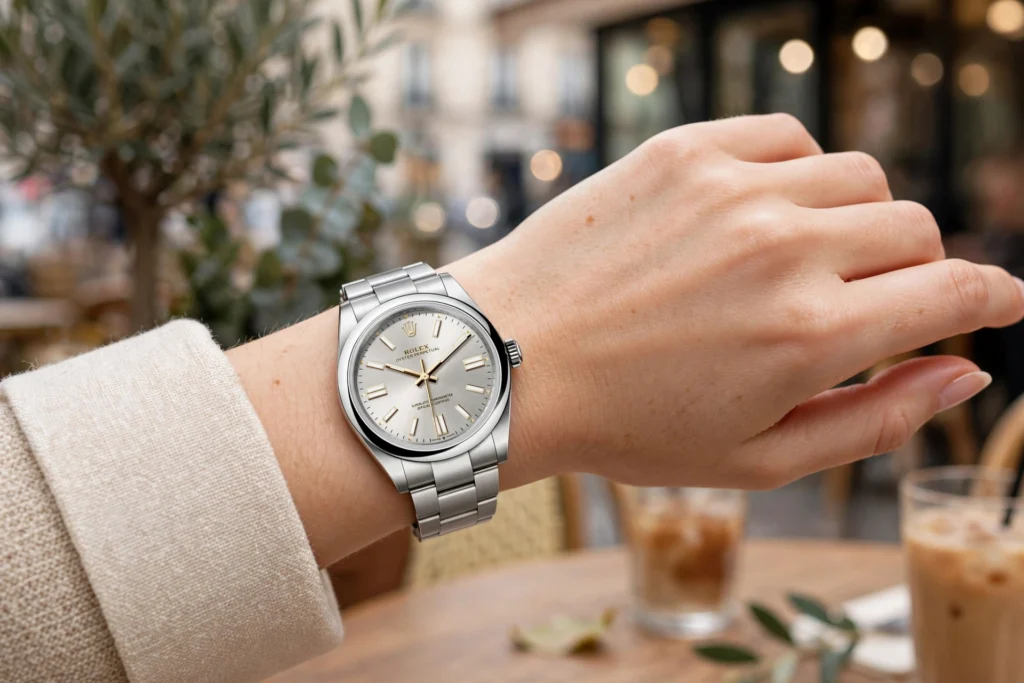
A documented service history acts as a medical record for the watch. It proves that the movement has been maintained by professionals.
- Value Add: A complete service history from authorized Rolex dealers or certified independent watchmakers can add 10% to 20% to the selling price.
- Buyer Confidence: Serious buyers look for service receipts as the #1 factor in decision-making. It assures them the watch is not hiding internal issues.
- Recent Service: A watch serviced within the last 1–2 years is more valuable because the buyer won’t need to spend $800–$1,000 on immediate maintenance. However, if a watch is running accurately (within -2/+2 seconds/day) and has a smooth beat, a recent service is reassuring but not strictly mandatory.
Box and Papers
“Papers” refer to the original warranty card, instruction manual, and certificate of authenticity. The “Box” is the original presentation case.
- Premium: Having the original box and papers can add 10% to 20% to the resale value.
- Provenance: The warranty card confirms the watch’s age and original purchase location, helping to verify authenticity.
- Marketability: A “full set” (watch, box, papers) is much easier to sell in the future than a “naked” watch (watch only).
Rolex Certified Pre-Owned (CPO)
Rolex now offers a Certified Pre-Owned program. These watches are at least two years old and have been fully inspected, serviced, and polished by Rolex technicians. They come with a new two-year international warranty. While these may cost slightly more than private sales, they offer the highest level of trustworthiness and authenticity.
Where to Buy Safely
Choosing the right seller is just as important as inspecting the watch itself. Different channels offer varying levels of risk and price.
Authorized Dealers and Certified Programs
Buying from an Authorized Dealer (AD) participating in the Rolex Certified Pre-Owned program is the safest option. These watches are guaranteed genuine, serviced, and warranted. You pay a premium for this security, but the risk of buying a fake is zero.
Reputable Independent Dealers
Established pre-owned watch dealers often provide their own warranties (typically 1 to 2 years) and have in-house watchmakers who authenticate every piece. They usually price their Second Hand Rolex Oyster Perpetual 41 models competitively, often in the $7,500 to $10,000 range for standard dials. Look for dealers with strong reputations and positive reviews.
Online Marketplaces
Platforms like Chrono24 and eBay offer vast selections. You might find a blue dial listed for $12,500 or a silver dial for $10,950.
- Caution: Always use escrow services provided by the platform.
- Verification: Demand high-resolution photos of the serial number, movement, and case. Ask for the original receipt.
- Authentication: Consider using a third-party authentication service before finalizing the payment if the seller is private.
Private Sellers
Buying from an individual can yield the best price, but it carries the highest risk.
- Meet Safely: Always meet in a public place, preferably near a bank or a watch repair shop.
- Verify First: If possible, take the watch to a local watchmaker for a quick authenticity check before handing over cash.
- Check History: Ask specifically about polishing history and request any old service receipts.
Important Considerations & Market Realities
As I have covered the essential aspects of buying a Second Hand Rolex Oyster Perpetual 41, there are limitations to consider. Regional price differences can fluctuate weekly based on currency exchange rates and local demand, so the prices listed here are estimates based on current market data. Additionally, the exact impact of polishing can be subjective; while heavy polishing is universally seen as negative, the tolerance for light polishing varies between individual collectors. Finally, specific service history verification can be challenging if the previous owner used independent watchmakers who did not provide detailed digital records, though the physical condition of the movement remains the ultimate truth.
By focusing on original condition, verifying the smooth sweep of the movement, and prioritizing watches with box and papers, you can confidently navigate the pre-owned market and find a timepiece that brings joy for a lifetime.