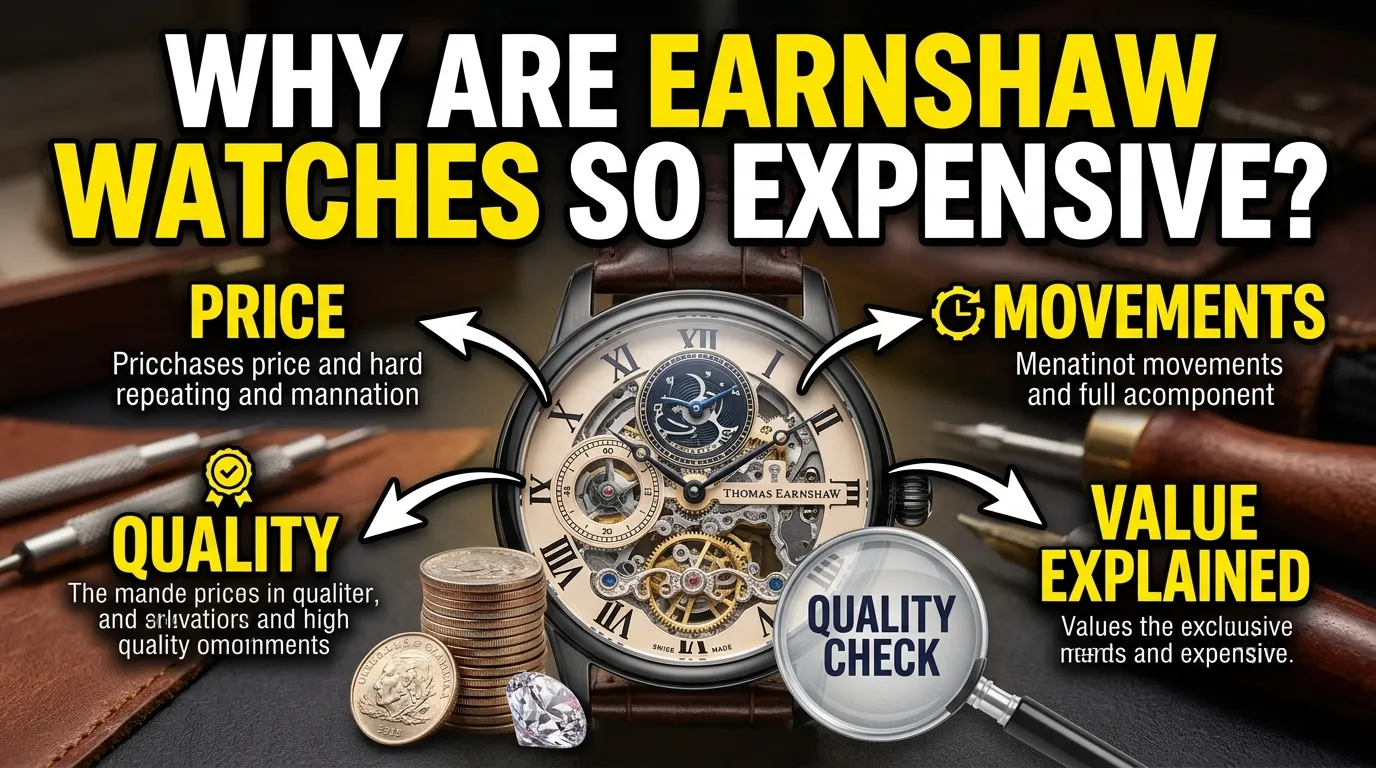
If you have ever looked at a Thomas Earnshaw watch and wondered, “Why are Earnshaw watches so expensive?” you are not alone. The brand presents a confusing picture: it sells watches that look like high-end luxury timepieces with prices ranging from under $200 to over $4,000, yet customer opinions on their value are sharply divided. The short answer is that the price is driven less by raw material costs and more by complex designs (like tourbillons), a marketing premium attached to a revived historical name, and the positioning as a design-focused fashion brand rather than a traditional manufacturer. While entry-level models often use reliable but inexpensive Japanese movements and mineral glass, higher-priced models command fees for mechanical complexity that traditional Swiss brands charge significantly more for. Ultimately, you are paying for the illusion of luxury and unique aesthetics, which offers great style for some but feels overpriced to enthusiasts who prioritize long-term durability and in-house heritage.
The Real Story Behind the Price Tag
The primary reason why are Earnshaw watches so expensive relative to their internal components is their positioning as a “design-focused brand” that sells a specific aesthetic rather than pure horological innovation. The brand charges a premium for the “British design” story and the visual complexity of the watches, such as skeletonized dials and tourbillons, which are often expensive to produce even with lower-cost movements.
However, the term “expensive” is relative. For their entry-level models, many critics argue the watches are actually overpriced for the quality provided. Reviews frequently mention that watches costing between $150 and $250 use mineral glass instead of scratch-resistant sapphire and have leather straps that are “decent but not premium”. In this segment, the cost is driven by marketing and the “fashion watch” appeal rather than high-grade materials. Conversely, their high-end models, which can cost over $3,000, derive their price from the inclusion of complex mechanisms like tourbillons and Swiss-made movements, which genuinely cost more to manufacture.
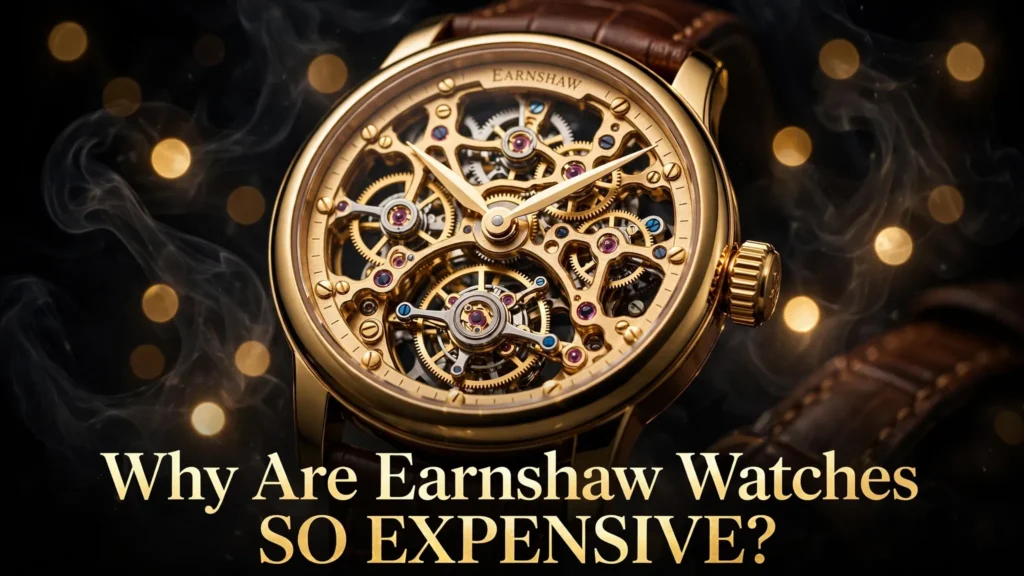
The confusion often stems from the brand’s dual identity. They occupy a niche between “affordable fashion watches and entry-level enthusiast mechanical brands”. This means a buyer might pay $500 for a watch that looks like a $2,000 piece but contains components that justify a lower price point. The “expense” is often the cost of the illusion of luxury.
Understanding the Movements: Japanese, Swiss, or Chinese?
The engine of any watch is its movement, and this is where the pricing strategy of Thomas Earnshaw becomes most clear. The brand uses a mix of movements, and the type installed directly dictates the price.
Japanese Miyota Movements in Entry Models
For the more affordable range, typically priced between $150 and $250, Earnshaw utilizes Japanese Miyota movements. These are available in both quartz and automatic versions. Miyota is a respected manufacturer known for reliability, and using these movements is a “major point in their favor” compared to no-name fashion watches that use unreliable generic calibers. These movements guarantee a level of accuracy and dependability that justifies the entry-level price point for many buyers. However, these are mass-produced workhorse movements, not hand-finished luxury calibers. When you buy an Earnshaw watch in this range, you are paying for the case design and the brand name, with the movement being a reliable but inexpensive component.
The “Swiss Made” and Hybrid Models
As the price increases, so does the complexity of the movement. Some models, like the Beagle, are marketed with Swiss-made movements from Inter T SA or Sellita (such as the SW200-1). A watch with a Sellita SW200-1 movement offers good value at the $500 price point, as this is a legitimate Swiss automatic movement used by many reputable brands.
However, there is nuance here. Some reviews note that while a movement might be technically “Swiss Made,” it may still contain Chinese components. Furthermore, higher-end models like the Palmerston Tourbillon or the Disraeli Tourbillon command prices of $3,575 and $4,102 respectively. These prices are driven by the inclusion of a tourbillon, a complex mechanism that counters gravity’s effect on timekeeping. Even if the base movement has Chinese origins, the assembly and regulation of a tourbillon require significant labor and skill, which drives up the cost.
The Controversy of Chinese Manufacturing
A significant factor in the debate over why are Earnshaw watches so expensive is the origin of the parts. Multiple sources indicate that many parts come from China, utilizing low-cost components. Some movements in their lineup are identified as second-grade Sea-Gull or Hangzhou-made calibers. Sea-Gull and Hangzhou are legitimate Chinese manufacturers, but they are generally associated with lower price points than Swiss or top-tier Japanese makers.
Critics argue that the brand uses “fictional history to create European flair” while relying heavily on Chinese manufacturing. When a watch with a Chinese automatic movement is sold for ₹30,000 or more (approx. $360 USD) in markets like India, customers often feel the price does not match the component cost. The perception of high cost arises when the retail price reflects a “European luxury” image while the internal hardware is sourced from budget-friendly supply chains.
Materials and Build Quality: Are They Worth the Cost?
To determine if the price is justified, we must look at what you are physically holding. The materials used in Earnshaw watches vary significantly between models, which explains the wide price disparity.
Case Construction
Across the board, Earnshaw uses 316L stainless steel for their cases. This is the industry standard for quality steel watches and offers good corrosion resistance. The cases are described as “well-polished” and executed cleanly for the price. In the context of affordable watches, 316L steel is a positive feature that adds tangible value. However, in the context of a $3,000 watch, steel is expected, and the value must come from elsewhere, such as the movement complexity.
The Crystal Issue: Mineral vs. Sapphire
One of the most common criticisms regarding value is the use of mineral glass crystals instead of sapphire. Sapphire is the gold standard for luxury watches because it is virtually scratch-proof. Earnshaw, particularly in their lower-priced models ($150–$250), uses mineral glass. While mineral glass is durable enough for daily wear, it “scratches more easily than sapphire”.
This is a clear area where costs are cut. By using mineral glass, the brand saves money, but the consumer receives a product that is less durable than competitors who might offer sapphire at similar price points. For a buyer asking why are Earnshaw watches so expensive, the answer here is that they arguably aren’t expensive enough to warrant premium materials in the entry range, yet the price is high enough that the lack of sapphire feels like a compromise.
Straps and Finishing
The straps on Earnshaw watches are often cited as another area where the cost-saving is apparent. Reviews describe the leather straps as “decent but not premium quality”. In some high-priced models, such as the Beagle which retails around £940, customers have noted that the “strap quality does not match the price tag”. If a watch costs nearly $1,200, buyers expect a high-grade alligator or calfskin strap, not a standard leather band. This mismatch between the price tag and the tactile quality of the accessories contributes to the feeling that the watches are overpriced.
The Brand Heritage: Real History or Marketing Fiction?
A major component of the price of any luxury good is the brand story. Thomas Earnshaw was a real historical figure—an English watchmaker (1749–1829) who made significant contributions to horology. He is famous for simplifying the marine chronometer and inventing the spring detent escapement, for which he was awarded £3,000 by the Board of Longitude in 1805. His innovations became standard in marine chronometers, cementing his legacy as a giant in watchmaking history.
However, the modern “Thomas Earnshaw” brand is a contemporary entity that emerged centuries later. It is described as a brand “inspired by the legacy” of the original watchmaker, not a direct continuation of his workshop. This distinction is crucial. The brand leverages this “British heritage” to create a sense of prestige and European flair.
Critics and forum users have pointed out that this heritage is largely “fictional” in the context of the modern company, which is actually owned by Dartmouth Brands Ltd, a group that manufactures watches mostly in China and ships them from Hong Kong. Some sources claim the brand was acquired by Breguet in 2004, but the prevailing evidence from watch enthusiast communities and industry analyses points to Dartmouth Brands as the current owner, operating with a business model focused on design and marketing rather than traditional Swiss or British manufacturing.
When you pay for an Earnshaw watch, a portion of that cost is paying for the marketing machine that keeps this historical connection alive in the consumer’s mind. For some, this story adds value. For others, knowing that the “British” brand is essentially a Hong Kong-based design house makes the high prices harder to justify.
Price Analysis: Entry-Level vs. High-End
The question “why are Earnshaw watches so expensive” yields different answers depending on which tier of the brand you are looking at.
The Affordable Range ($150 – $250)
In this bracket, Earnshaw competes with brands like Seiko and Tissot’s lower end.
- Price Point: Typically $150 to $250, though sales can drop prices to around $129.
- What you get: A 316L steel case, a reliable Japanese Miyota movement, and a mineral crystal.
- Value Verdict: At full price, these are often considered “overpriced for their quality” by enthusiasts who can get sapphire crystals and better finishing from competitors like Seiko in the same range. The “expense” here is largely due to the brand’s positioning as a designer label rather than a value leader. However, during sales, they can represent a “good blend of reliable movement + classic design”.
The Mid-Range ($500 – $1,000)
- Price Point: Around $500 to £940 ($1,200+).
- What you get: Models like the Beagle feature skeletonized dials and Swiss-made movements (Inter T SA or Sellita).
- Value Verdict: These watches offer “good value” for the complexity of the dial and the Swiss movement, provided the buyer accepts the mixed origin of components. However, complaints about strap quality and the “overpriced” nature of Swiss models persist.
The Luxury Tier ($3,000 – $4,500)
- Price Point: MSRP can reach $3,575 for the Palmerston Tourbillon and $4,102 for the Disraeli Tourbillon.
- What you get: Complex tourbillon mechanisms, skeletonized designs, and premium finishing.
- Value Verdict: These prices are driven by the mechanical complexity of the tourbillon. While still controversial among purists who prefer established Swiss houses at this price point, the cost reflects the genuine difficulty of manufacturing and assembling a tourbillon, even if the base movement has Chinese roots.
| Model Tier | Price Range (USD) | Movement Type | Crystal | Value Proposition |
|---|---|---|---|---|
| Entry-Level | $129 – $250 | Japanese Miyota (Quartz/Auto) | Mineral Glass | Reliable movement, stylish design, but lacks premium materials. |
| Mid-Range | $500 – $1,200 | Swiss (Sellita/Inter T) or Hybrid | Mineral/Sapphire* | Good value for skeleton dials; strap quality often criticized. |
| Luxury | $3,500 – $4,500 | Tourbillon (Chinese/Swiss base) | Sapphire | High cost due to mechanical complexity; niche appeal. |
*Note: Crystal type varies by specific model, but mineral is common in lower tiers.
Customer Sentiment: Is the Value There?
Public opinion on Earnshaw is polarized, which further complicates the answer to why are Earnshaw watches so expensive.
The Critics
A significant number of customers feel the watches are “grossly overpriced” for the quality received. Common complaints include:
- Durability Issues: Reports of watches breaking within a year, or even within days of purchase, are present in user reviews. Some users reported “layers of black scraps” coming off the watch shortly after buying it.
- Quality Control: Instances of new watches arriving non-functional or with broken crystals are documented.
- Resale and Repair: One user noted that the cost to fix a broken watch was higher than the watch’s worth, suggesting poor long-term value.
- Marketing Tactics: Many feel misled by the “British heritage” marketing, viewing it as a “cheap brand parading as an expensive one”.
The Supporters
Despite the criticism, there are buyers who are satisfied.
- Aesthetic Appeal: Many agree that they are “decent looking watches” with “cleanly executed” dials.
- Reliability in Lower Tiers: For those who buy the Miyota-powered models, the movement reliability is often praised as a strong point compared to other fashion watches.
- Design Value: Some owners feel that if you ignore the heritage marketing and just look at the watch as a fashion accessory, it offers a unique style that is hard to find elsewhere at the price.
Warranty and After-Sales Service: A Hidden Cost?
When evaluating if a watch is “expensive,” one must consider the cost of ownership, including warranty support. Earnshaw offers a “24-month international warranty”. On paper, two years is a standard and decent coverage period.
However, the terms of this warranty reveal potential hidden costs and inconveniences that affect the overall value proposition:
- Shipping Costs: Warranty claims require the customer to ship the watch to Hong Kong for repairs. Crucially, the customer is responsible for all transportation costs, including postage, insurance, and packing materials. For an international buyer, shipping a watch to Hong Kong can cost $50 to $100 or more, which is a significant percentage of the value of an entry-level Earnshaw watch.
- Coverage Exclusions: The warranty is quite restrictive. It explicitly excludes the crystal, crown, case, strap, bracelet, and battery. It also does not cover water damage resulting from accident or negligence. Since mineral crystals scratch easily and water resistance is a common failure point in lower-tier watches, these exclusions mean that many common issues will not be covered, leaving the owner to pay for repairs out of pocket.
- Service Reality: Some customers have reported that the brand suggested it would cost more to fix and buy parts than the watch was worth, effectively totaling the timepiece.
These factors suggest that while the upfront price might seem competitive during a sale, the potential cost and hassle of after-sales service can make the total cost of ownership higher than expected.
Comparison with Competitors: Seiko and Tissot
To truly understand the pricing, we must compare Earnshaw to its direct competitors in the £200–£2,000 bracket, such as Seiko and Tissot.
- Seiko: Seiko offers a massive range of watches with movements made entirely in-house. Their movements benefit from “widespread parts availability and technician familiarity”. A Seiko watch in the $200–$400 range often comes with a Hardlex (proprietary mineral) or sapphire crystal and a reputation for bulletproof durability. Compared to an Earnshaw with a generic Miyota and mineral glass, Seiko often provides better long-term value and lower maintenance costs.
- Tissot: As a Swiss brand, Tissot carries “Swiss Made” heritage that is verified and regulated. While Tissot watches are generally more expensive on average, they offer genuine Swiss manufacturing standards, sapphire crystals, and movements (like the Powermatic 80) that are highly regarded. When an Earnshaw “Swiss Made” model approaches Tissot prices, buyers often prefer Tissot due to its established reputation and clearer supply chain transparency.
In this light, why are Earnshaw watches so expensive? They are priced to compete with the image of these brands, but often without the same level of in-house manufacturing or material quality. They fill a gap for buyers who prioritize a specific “skeleton” or “tourbillon” look at a price point where traditional Swiss brands cannot compete, but they sacrifice the durability and resale value of giants like Seiko and Tissot.
Conclusion: Are They Worth the Price?
So, why are Earnshaw watches so expensive? The answer lies in a combination of factors: the cost of complex designs like tourbillons, the marketing premium attached to a revived historical name, and the positioning as a design-led fashion brand rather than a pure tool-watch manufacturer.
For the buyer seeking a reliable daily beater, the entry-level models may feel overpriced due to the use of mineral glass and standard straps. The “expense” here is hard to justify when compared to the sheer value offered by Seiko. However, for the buyer who desires the visual drama of a skeletonized dial or a tourbillon and cannot afford a $10,000 Swiss piece, Earnshaw provides an accessible entry point. The high prices of their tourbillon models reflect the genuine mechanical complexity involved, even if the brand’s heritage is more marketing than manufacturing reality.
Ultimately, the value of an Earnshaw watch depends on what you prioritize. If you value unique aesthetics and the story of Thomas Earnshaw, the price may seem fair. If you prioritize material longevity (sapphire crystals), in-house movement heritage, and hassle-free servicing, the price tag may feel inflated relative to the components inside. As with any purchase in this segment, it is advisable to wait for sales, where prices drop to the $129–$179 range, making the trade-off between style and substance much more favorable.
Must keep in mind before buy the watch
While this report synthesizes available data, there are critical blindspots. There is a lack of long-term durability test results for Earnshaw watches beyond anecdotal user reviews. Additionally, detailed documentation on the warranty repair process and specific repairability data (availability of spare parts for specific Chinese movements) is scarce. Potential buyers should be aware that the long-term serviceability of these watches remains an unverified variable compared to established brands like Seiko or Tissot.