
There is a unique magic in wearing a piece of history on your wrist. For watch lovers, nothing says “heritage” quite like the timepieces from HMT (Hindustan Machine Tools). If you are hunting for HMT watches old models 1980, you are stepping into the golden era of Indian watchmaking. These are not just tools to tell time; they are stories of a nation’s industrial growth, powered by mechanical hearts that still beat today.
The 1980s were a pivotal decade. HMT dominated the Indian market, offering robust and stylish mechanical watches to everyone from soldiers to students. Today, these HMT watches old models 1980 are prized by collectors for their durability and classic design. In this guide, we will explore the most iconic models, verify their features, check current market values, and help you understand why these watches remain so special.
The Legacy of HMT: Why the 1980s Matter
To truly appreciate HMT watches old models 1980, we must first understand their roots. HMT was established in 1953 by the Indian government to build machine tools, but its watch division began in 1961 through a partnership with Citizen Watch Co. of Japan. This collaboration allowed HMT to use proven mechanical movement architectures that became the heart of many Indian watches.
By the 1980s, HMT had firmly established itself as a market leader. The company expanded its Bangalore factory multiple times, gaining the ability to make critical components like main springs and shock absorbers locally. This self-reliance meant that HMT watches old models 1980 were built with immense local manufacturing pride, even though the core design roots were Japanese.
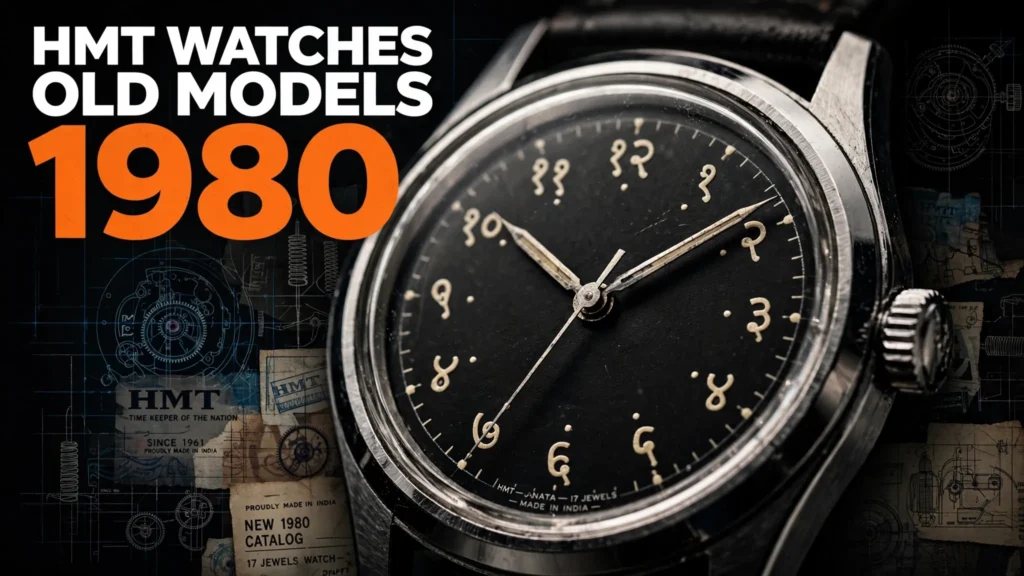

During this decade, HMT ruled the Indian wristwatch market with reliable mechanical watches. While the rest of the world slowly switched to battery-powered quartz watches, HMT stuck with mechanical movements for a long time, only introducing quartz in 1981. This means many HMT watches old models 1980 you find today are pure mechanical wonders, powered by winding a crown rather than a battery.
The watch division eventually closed in 2016, silencing the factories that once produced thousands of watches daily. This closure has turned every surviving HMT watches old models 1980 into a finite resource. Once they are gone, they are gone forever, making them prized possessions for enthusiasts who value history.
Inside the Machine: What Makes 1980s HMT Watches Tick?
Before diving into specific models, it is important to understand what powers these timepieces. The heart of most HMT watches old models 1980 is a mechanical movement, specifically the HMT caliber 0231, which is derived from the Citizen cal. 0201. This is a manual winding movement, meaning you must twist the crown every day or two to keep it running.
These movements typically feature 17 jewels. In watchmaking, “jewels” are tiny synthetic ruby bearings that reduce friction in moving parts, ensuring the watch lasts longer and keeps better time. The presence of 17 jewels in HMT watches old models 1980 indicates a quality mechanism designed for longevity and smooth operation.
Another key feature of this era is the “Shock Proof” capability, often written on the dial or case back. This feature was crucial for a “people’s watch” that needed to withstand the rough and tumble of daily life in India. Whether worn by a farmer in the fields or a student on a bicycle, these watches were built to survive impact.
The dials from this period also tell a story of evolving technology. From 1970 to 1980, HMT primarily manufactured printed dials, but as precise machinery was set up around 1980-1990, they began producing inserted dials. If you are hunting for HMT watches old models 1980, you might find a mix of both, with later models featuring the textured and premium look of inserted dials.
Case sizes for these vintage watches generally range between 34mm and 40mm. This is considered a perfect size for most wrists today, offering a classic, understated look that fits well under a shirt cuff. Unlike modern oversized watches, HMT watches old models 1980 offer a timeless proportion that never goes out of style.
The HMT Janata: The People’s Watch
No discussion about HMT watches old models 1980 is complete without starting with the Janata. The name “Janata” means “People” in Hindi, and true to its name, this was HMT’s most democratic product. It was designed to be affordable and accessible to every Indian, with the very first model launched by India’s first Prime Minister, Jawaharlal Nehru.
By the 1980s, the Janata was a household name known for its simple, clean design. The dial usually featured clear Arabic numerals or baton markers, making it easy to read at a glance, while the stainless steel case was built to last a lifetime. It focused on function over flair, becoming the reliable daily driver for millions.
Today, the Janata is a favorite among collectors who appreciate minimalism and history. A good condition Janata from the 1980s can be a stunning addition to any collection, reflecting its status as an icon of Indian industry. The market value for these watches remains very accessible for new collectors.
Currently, a Janata in good condition sells for between ₹2,000 and ₹5,000. Some specific variants, especially those with unique dial colors or pristine conditions, might fetch slightly more, but they remain one of the most affordable entry points into vintage watch collecting. When buying, look for the “Shock Proof” marking and the 17-jewel movement to ensure authenticity.
The HMT Pilot: A Legend in the Sky and on the Wrist
If the Janata was the watch of the people, the Pilot was the watch of the heroes. The HMT Pilot is arguably the most sought-after model among collectors today, inspired by aviation instrument watches. It features a distinct black dial with luminous Arabic numerals and a distinctive triangle marker at the 12 o’clock position, helping pilots orient themselves quickly.
The Pilot watch, along with models like the Jawan, Sainik, and Rakshak, was synonymous with the Indian military. HMT was tasked with supplying kit-issued watches to the Indian Army and Air Force during the 1970s and 1980s. This military heritage gives the Pilot a rugged character that transcends its humble price point, built for legibility and durability under pressure.
In the 1980s, the Pilot came in various dial colors, including the classic black and a rare yellow dial version. The yellow dial Pilot from the 1980s is particularly rare and commands a premium among enthusiasts due to its scarcity. The standard black dial Pilot usually features a stainless steel case and a manual winding mechanical movement with 17 jewels.
The value of the HMT Pilot reflects its immense popularity and military roots. Clean examples of HMT watches old models 1980 in the Pilot line can command prices between ₹3,000 and ₹8,000, depending on the dial variant and condition. The yellow dial versions or those with original military markings can sometimes sell for even more, making them a top target for serious collectors.
The HMT Kohinoor: Elegance with a Cultural Twist
Moving from rugged military style to something more refined, we have the Kohinoor. Introduced in the early 1970s, the Kohinoor continued to be a popular choice throughout the 1980s, named after the famous diamond to suggest it was a gem in HMT’s crown. It is known for its elegant design and typically features a 36mm case diameter, a very wearable size for both men and women.
One of the most unique features of the Kohinoor line is the availability of a Hindi dial variant. This version features Devanagari numerals instead of Arabic numbers, making it a true cultural icon in Indian watchmaking. These Hindi dial versions were produced in limited quantities, making them quite rare and special for collectors today who seek unique pieces.
Technically, the Kohinoor shares the reliable DNA of its siblings, featuring a 17-jewel HMT caliber 0231 mechanical movement. Some models also come with a transparent display caseback, allowing you to see the beautiful movement ticking away inside. This is a rare feature for watches of this price range and era, adding significantly to the Kohinoor’s appeal.
In terms of pricing, Kohinoor watches typically sell for between ₹1,200 and ₹3,500 in India. However, restored models or those with the rare Hindi dial can fetch higher prices, often around ₹2,650 to ₹2,900 depending on the seller and condition. The Kohinoor represents the softer side of HMT watches old models 1980, perfect for formal occasions and office wear.
The HMT Kanchan: The ‘Dowry Watch’ of India
In the social fabric of 1980s India, the Kanchan held a very specific and important place. It was widely known as the “dowry watch” and was considered essential for marriages across the country. If a family was looking for a reliable, automatic watch for a groom, the Kanchan was often the top choice due to its prestige and functionality.
What set the Kanchan apart from the Janata or Pilot was its movement; while many HMT watches were manual wind, the Kanchan often featured an automatic movement. This means it wound itself using the motion of the wearer’s wrist, so you didn’t have to remember to wind it every day. The automatic Kanchan models typically boasted 21 jewels, a step up from the 17 jewels found in the manual models.
The design of the Kanchan was usually more dressy, often coming with a gold-plated case or a two-tone finish. This gave it a luxurious look that fit the wedding theme perfectly, with clean and sophisticated dials often featuring a date window for added utility. It was a symbol of prosperity and a significant gift in Indian culture.
Today, a pre-owned vintage HMT Kanchan from 1980 can be found for around ₹2,500. Despite its association with weddings, it is a robust watch that serves well as a daily driver. The automatic movement is a great feature for those who want the mechanical experience without the daily winding ritual, making it a practical piece of 1980s social history.
The HMT Nishat: The Underrated Classic
While the Pilot and Janata get most of the fame, the Nishat is a strong contender for the title of the best everyday vintage watch. Produced in the 1980s, the Nishat is often compared to the Black Pilot due to its similar rugged aesthetic and reliable performance. It features a stainless steel case and a shock-proof 17-jewel mechanical movement, built to last.
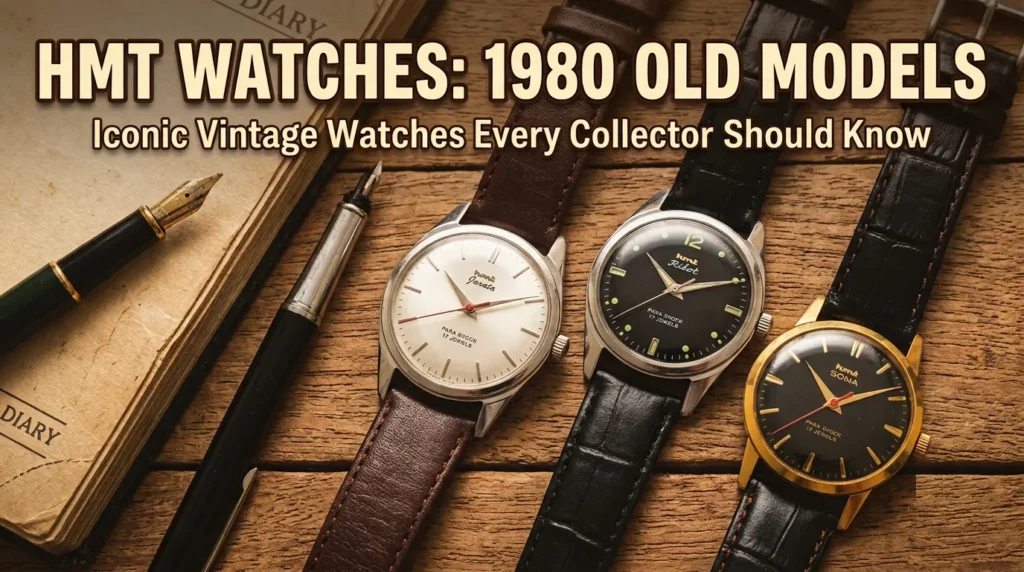
The Nishat typically has a case size of around 35mm to 38mm, making it very comfortable on the wrist for daily wear. It was designed as a casual yet formal watch, suitable for any occasion, with dial options including white and black. The clear, legible markers ensure you can tell the time instantly, just like its military cousins.
One of the most appealing aspects of the Nishat is its affordability compared to other models. You can often find a vintage Nishat from the 1980s for as low as ₹1,000 to ₹2,500, depending on the condition. This makes it an excellent choice for new collectors who want an authentic HMT watches old models 1980 experience without breaking the bank.
The Nishat is proof that you don’t need to spend a fortune to own a piece of history. It offers the same reliable 17-jewel movement and shock-proof construction as its more famous siblings. Its understated design allows it to fly under the radar, making it a cool choice for those who know their watch history and appreciate value.
How to Spot Authentic HMT Watches from the 1980s
As the popularity of HMT watches old models 1980 grows, so does the number of fakes in the market. Replicas and modified models are common, so it is crucial to know how to spot a genuine piece to protect your investment. Here are some simple tips to help you verify authenticity before buying.
First, check the dial details carefully for quality and accuracy. Authentic dials carry unique imperfections that fakes often lack, so look for the correct HMT logo, font, and spacing. Fake watches often have blurred fonts, incorrect spacing, or unusual fonts that do not match original models, and if the dial looks too perfect, it might be a replica.
Second, inspect the case back for specific engravings and markings. Original models often have engravings such as “Shock Proof,” the movement name (e.g., 0231), and serial numbers that should be crisp and clear. Fakes might have shallow, messy, or missing engravings, which is a major red flag for collectors.
Third, verify the movement by opening the back or asking a watchmaker to confirm. Authentic HMT watches old models 1980 should have a mechanical movement with visible HMT markings, whereas counterfeit watches frequently use inferior movements that don’t tick smoothly. If the watch is supposed to be mechanical but ticks once per second like a quartz watch, be suspicious.
Fourth, feel the weight of the watch in your hand to gauge its build quality. Original HMT watches have a reassuring heaviness due to their stainless steel cases and solid mechanical movements. Fakes may feel lighter because they use hollow or plastic components, lacking the solid feel of a genuine vintage timepiece.
Where to Find These Vintage Treasures
Finding rare HMT watches old models 1980 requires patience, research, and a strategic approach to sourcing. You can find them in antique markets, through collector communities, and on various online platforms that specialize in vintage goods. Websites like Etsy, eBay, and specialized Indian vintage watch stores often have listings, but buyer beware.
Local repair shops can also be a goldmine for undiscovered treasures. Sometimes, old watches are sitting in drawers, forgotten by their owners, and building connections with local watchmakers can give you access to pieces that never make it to the internet. This offline approach often yields better prices and more honest assessments of condition.
When buying online, always ask for high-resolution images of the dial, case back, and movement before paying. Check the seller’s reviews and ask about the service history of the watch, as vintage watches are old and it is normal for them to need some maintenance. A recently serviced watch is a bonus, but be prepared to service it yourself if needed to ensure longevity.
Price Guide: What to Expect in 2026
Prices for HMT watches old models 1980 vary based on condition, rarity, and specific model features. The following table provides a general guide based on current market trends for watches in good, working condition. Restored watches or those with original boxes and papers might cost significantly more.
| Model | Price Range (INR) | Key Features |
|---|---|---|
| HMT Janata | ₹2,000 – ₹5,000 | 17 Jewels, Manual Wind, “Shock Proof” |
| HMT Pilot | ₹3,000 – ₹8,000 | Luminous Dial, Military Heritage, Rare Yellow Variant |
| HMT Kohinoor | ₹1,200 – ₹3,500 | 36mm Case, Hindi Dial Option, Display Back |
| HMT Kanchan | ~₹2,500 | Automatic Movement, 21 Jewels, Gold Plated |
| HMT Nishat | ₹1,000 – ₹2,500 | 35-38mm Case, Shock Proof, Affordable |
These prices reflect the value of heritage and mechanical craftsmanship in 2026. Remember, these are investment pieces in terms of history, not just timekeeping devices, and their value tends to hold steady or increase as supply dwindles. Always factor in potential servicing costs when budgeting for your purchase.
Caring for Your Vintage HMT
Owning a vintage mechanical watch comes with responsibility, as these HMT watches old models 1980 are decades old and need care to keep running. If it’s a manual wind, wind it gently every day at the same time, and don’t force it if you feel resistance to avoid damaging the mainspring. Proper winding habits ensure the longevity of the movement.
Most vintage HMTs are not water-resistant by modern standards, so keep them away from water, showers, and swimming pools. Water damage is a common killer of vintage watches, and the seals in these old cases are likely degraded after 40+ years. Treat your watch as a delicate instrument rather than a modern sports tool.
It is recommended to service your mechanical watch every 3-5 years to maintain accuracy and health. A good watchmaker can clean the movement, replace worn parts, and ensure it keeps good time, preventing small issues from becoming major repairs. Regular maintenance is the key to passing these watches down to the next generation.
Store your watch in a cool, dry place when not in use to prevent moisture buildup and rust. If you aren’t wearing it for a while, let the power reserve run down completely before storing it to relieve tension on the mainspring. With proper care, your HMT watches old models 1980 can continue ticking for another 40 years.
A Fragment of History on Your Wrist
The 1980s were a glorious time for HMT, and the watches from this era stand as a testament to Indian engineering and design. Whether it is the rugged Pilot, the democratic Janata, the elegant Kohinoor, or the automatic Kanchan, each HMT watches old models 1980 has a unique story to tell. Collecting these watches is not just about owning a timepiece; it is about holding a fragment of the past.
With the factory doors closed since 2016, these watches are becoming rarer every day, making them even more special. If you have the chance to own one of these icons, take it, as they are affordable, durable, and full of character. In a world of smartwatches and digital displays, wearing an HMT watches old models 1980 is a statement of style and a nod to a simpler, more mechanical time.